When James Maki fell onto the electrified third rail in a Boston subway station, his life changed in a single, brutal moment.
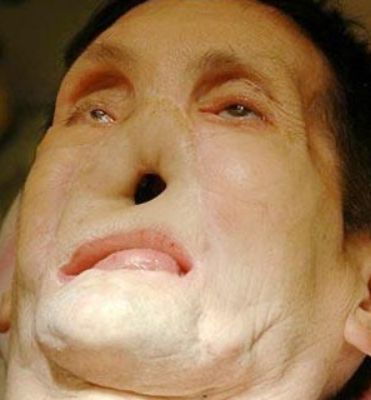
The voltage from the third rail almost completely burned his face. What remained was not just physical devastation—but a pain that ran deeper than any visible wound.
His face was so severely disfigured that he withdrew from the world for years. He avoided daylight, avoided people, avoided mirrors.
Not just because of the scars—but because of the stares. Because of the whispers. Because of the cruelty that is sometimes silent, yet strikes like a blow to the heart.
When he stepped before the cameras at a press conference at Brigham and Women’s Hospital, it was more than just a medical moment. It was the rebirth of a man.

A team of 35 surgeons and specialists had attempted the seemingly impossible in a 17-hour operation: a partial face transplant—the first of its kind in New England and only the second in the entire United States.
But what happened there was more than a surgical procedure. It was an act of courage, of science—and of humanity.
Dr. Bohdan Pomahac, who treated Maki the night of the accident, still remembers the extent of the devastation.
“He arrived in a state that can’t be shown,” he said quietly. “His face was almost completely burned—his nose, upper lip, palate, almost all of his skin.”
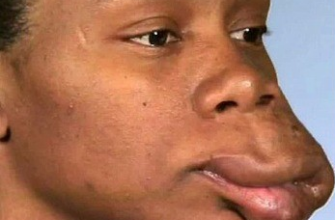
Multiple surgeries attempted to salvage what was left. But nothing could give him back what he had lost. Where his nose had once been, there was a gaping hole.
His mouth was so badly damaged that even speaking and eating became agony. Every bite, every word was a struggle.
Then, in France, the unimaginable happened: the world’s first face transplant. A glimmer of hope. A medical miracle that suddenly became real. Maki’s doctors began to investigate whether such a rescue might be possible for him as well.

And so, last month, he received a new nose, a new upper lip, a new hard palate—skin, muscles, and nerves that gave him back not only his appearance, but also his senses and expression.
When he looked in the mirror for the first time after the operation, he gasped. “The first thing I thought was: My nose looks like my old nose,” he said, his voice trembling.
It wasn’t vanity. It was recognition. A piece of his identity rising from the ashes.
Maki, a Vietnam veteran who struggled with addiction after the war, now speaks of this transplant as his “second chance.”
He is the father of a 23-year-old daughter, separated from his wife, and bears the scars of a life that often pushed him to his limits. But now he also wears hope on his face.
His new face is still marked by visible scars. One eye remains partially covered. The scars of the fire haven’t completely disappeared. But they no longer define him.

At the press conference, the donor’s widow, Joseph Helfgot, stood beside him, represented by his wife, Susan Whitman-Helfgot. Her decision to donate her late husband’s face demonstrates a greatness that words can hardly express.
“To see Jim breathe, speak, and eat again—that is a blessing,” she said, her voice filled with emotion, and appealed to the public to become organ donors.
The hospital didn’t bill Maki for the $200,000 operation—it was their first procedure of this kind. Further minor corrections may follow.
And for the rest of his life, he will have to take medication to prevent rejection—medication that carries its own risks.
But for Maki, the price is small compared to what he has regained. To be able to eat again. To breathe freely again. To go outside again without having to avoid stares.
For him, it is nothing short of a miracle. A miracle of courage, compassion—and a second face that gave him a second life.