Katie Stubblefield sometimes smiles when she talks about her face transplant—with a humor that surprises many. “It was probably the longest sleep of my life,” she says, trying to bear the gravity of the procedure with a touch of lightness.
But behind this statement lies a story full of pain, fear—and unwavering hope.
When her voice still falters and words aren’t clear enough, her parents, Robb and Alesia, are by her side, just as they have been since that fateful March 25, 2014.

Back then, Katie was only 18 years old. A self-inflicted gunshot wound to her face was so severe that hardly anyone believed she would survive. Her face was almost completely destroyed, her body scarred by complications. And yet, her heart kept beating.
“Four steps forward, two steps back,” is how her father, Robb, often describes the family’s long journey. It was a journey of intensive care units, operating rooms, and endless nights of anxiety.

… Finally, Katie became a patient at the Cleveland Clinic—and a part of medical history. There, she underwent the hospital’s third face transplant and the clinic’s first complete face transplant.
At just 21 years old, she became the youngest recipient of a face transplant in the United States. The procedure was monumental. A team of eleven surgeons and dozens of specialists worked for 31 hours.
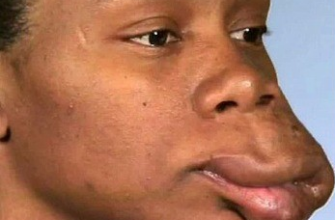
Nearly every essential part of her face was replaced: scalp, forehead, eyelids, eye sockets, nose, cheeks, upper and lower jaw, teeth, muscles, nerves—all of her facial skin. One hundred percent of her facial tissue was transplanted.

It was as if she were given a new life—layer by layer.
And yet, it was no miracle that everything healed immediately. Recovery continues to this day. Katie is learning Braille, as her sight has not yet returned.
Further surgeries are intended to improve the function of her jaw and tongue. Every step forward is hard-won, every small success a triumph.
Despite everything, she looks to the future. She dreams of going to college. Perhaps she wants to become a counselor or a teacher. She longs for independence—and to one day simply walk down the street without people stopping and staring.
Her mother, Alesia, calls the transplant “a second chance at life.” During the ethical review before the procedure, Katie said with remarkable clarity, “I can’t go back. I have to go forward.”
It’s almost miraculous that the bullet only grazed her brain. The paramedics could hardly believe she was still alive. After initial treatment in Mississippi, she was transferred to a trauma center in Memphis. Dozens of surgeries followed—each one a battle.
Early on, the doctors made it clear: Without a transplant, her future was uncertain. Five weeks after the injury, Katie was transferred to the Cleveland Clinic.
There she spent years—between reconstructive procedures, examinations, and the anxious hope of finding a suitable donor. Specialists from nearly every medical discipline became an integral part of her life.
With the support of psychiatrist Dr. For years, Kathy Coffman prepared Katie emotionally for this step. In 2015, she signed the consent form.
But it took another 18 months to find a suitable donor—a process made more difficult by Katie’s young age and petite stature.
Then, three years after arriving in Cleveland, the call came. A donor had been identified.
The operation became more complex than planned. Nevertheless, the team succeeded in transplanting all of the donor’s facial tissue—from the mid-skull down to the neck. Bone structures were used to reconstruct her upper and lower jaw.

Today, after more than 17 surgeries, Katie can chew, swallow, breathe more freely—and express emotions. A smile. A frown. A gentle raising of her eyebrows. Small movements that are taken for granted by others, but mean miracles to her.
The doctors speak of a success – made possible by medical innovation, but also by the unconditional love of her family and the immeasurable generosity of a donor family.
Katie herself found words of gratitude that deeply touched the heart: “I will be forever grateful for the care I have received and for the extraordinary gift that my donor and her family have given me. There are no words to express it.”
Her journey is not yet over. More surgeries, therapies, and challenges lie ahead. But her father says quietly, with that mixture of humility and hope that only someone who has almost lost their child knows:
“We still have a long way to go. But we are grateful that she is alive at all.”