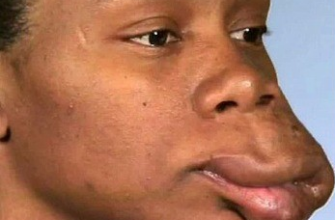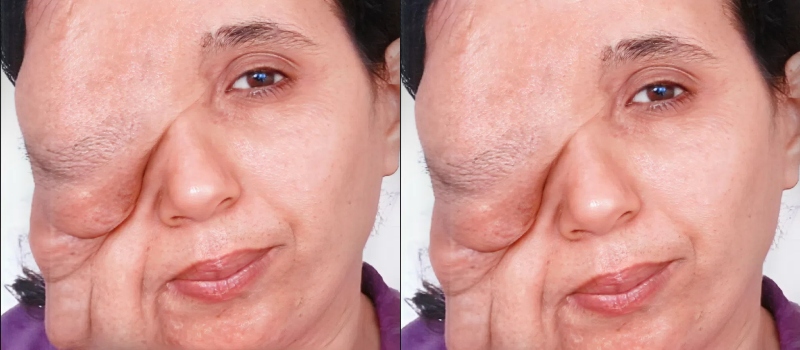
Samira Benhar always knew her life would be different. At 39, she bore the burden of a disease whispered about but never fully understood: neurofibromatosis. It had left her with massive tumors that spread across the right side of her face, completely covering her eye. In Casablanca, Morocco, this made her feel like a ghost walking among the living. People avoided her gaze, and looks were often worse than words. Her own husband, unable to bear the pressure of social judgment, left her, and she had to raise her two children, ages 9 and 12, alone, heartbroken and humiliated.
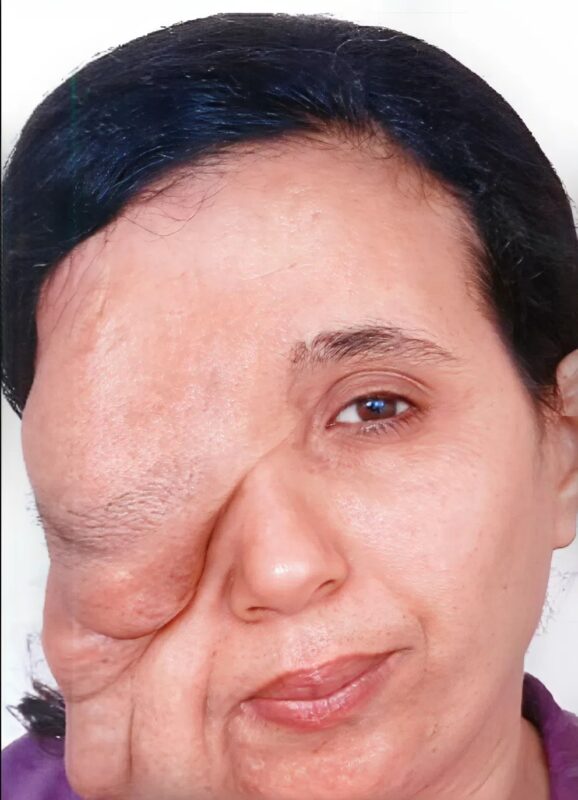
Her days were a routine of hiding, of remaining concealed, of hoping the world wouldn’t notice her. Even in her own home, she felt like a stranger, unable to escape the shadow of her own reflection. On particularly bad days, she would sit in the park near her apartment, head in her hands, wondering if anyone could see beyond the deformities, beyond the tumors, and see her as Samira: the mother, the woman, the human being with dreams still alive 🌿.
One quiet afternoon, as she sat silently on a worn wooden bench, a woman approached her. At first, Samira stiffened, expecting to be judged or ridiculed. But the woman smiled kindly and asked if she could take her picture.
Confused, Samira explained that she didn’t have one. Without hesitation, the woman took her to a nearby shop and took a photo 📸. Then, with a voice full of sincerity, she said, “I’m not promising anything, but I’ll do everything I can to help you.”
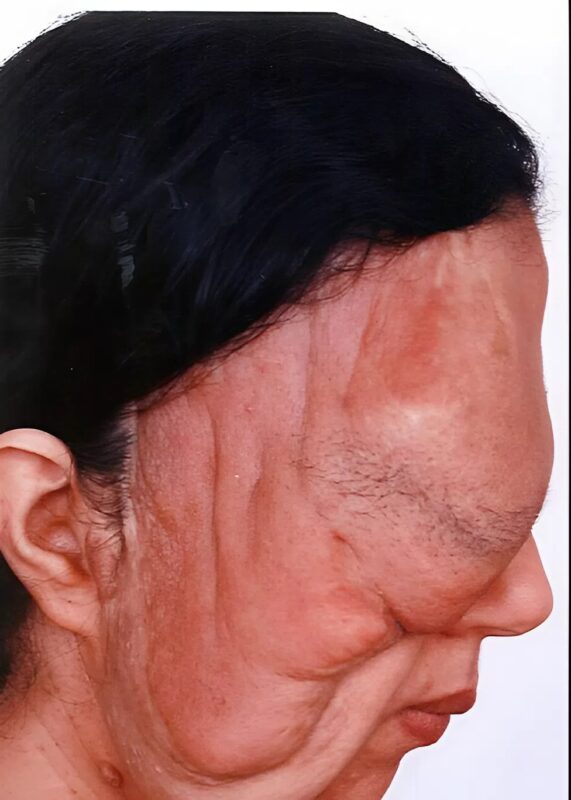
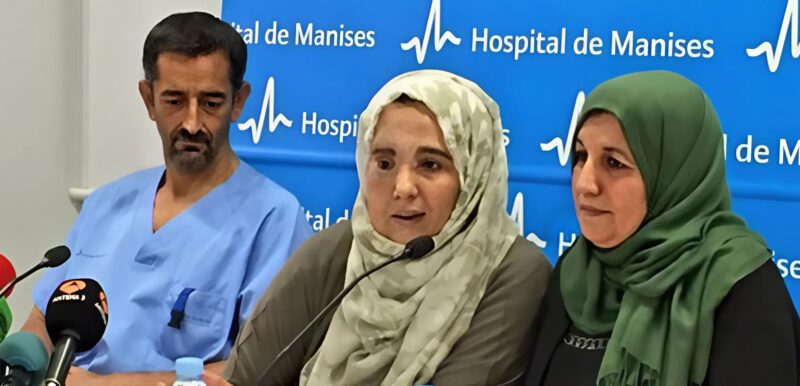
The woman worked with the Adra Foundation, a religious organization that runs a health initiative in Morocco. Samira’s case was taken to Dr. Pedro Cavadas, a world-renowned reconstructive surgeon at the Manises Hospital in Valencia, Spain. Dr. Cavadas studied the images and explained that, while her condition was rare, surgery could make a significant difference. “These tumors are benign,” he reassured her, “but we can work to restore the symmetry of your face.”
Samira’s heart pounded with a mixture of hope and fear. The thought of leaving her children behind, of traveling alone to Spain for multiple surgeries, terrified her. Yet, she could almost feel the possibility of a new life whispering in the corners of her mind. Her family encouraged her, the Adra Foundation covered the expenses, and soon she was on a plane to Valencia, with more hope than luggage.
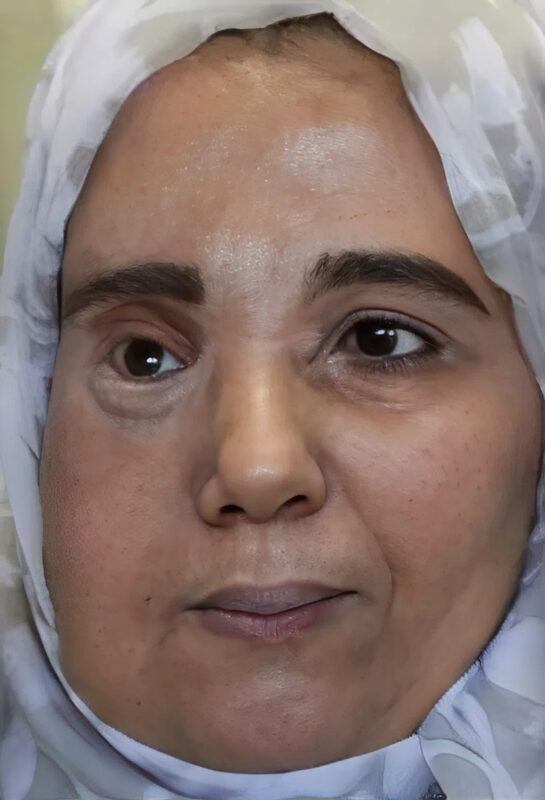
The surgeries were long and exhausting. Three operations were necessary: removing the tumors, reconstructing her face, and fitting her with an ocular prosthesis. Each step brought new challenges, moments of pain, and flashes of doubt. But every morning, waking up in her hospital bed, she felt a little more like herself, a little closer to the person she had always wanted to be. At the end of the final procedure, the team held a press conference. As Samira looked at herself in a polished mirror, she felt tears streaming down her cheeks. For the first time in decades, she saw a face that reflected hope instead of fear. “Today I feel like I’ve been reborn,” she whispered, her voice trembling. “I will never forget what you have done for me.” Dr. Cavadas smiled, but Samira noticed that his eyes reflected the weight of countless stories like hers: lives transformed by science, skill, and compassion.
Upon returning to Morocco, she prepared to reunite with her children after more than a year apart. Her homecoming was a mixture of tears, laughter, and disbelief. Her children barely recognized her, but their smiles dispelled the last fear that had gripped her for so long 💖. The Adra Foundation promised to continue supporting her, helping her find a home and a job so she could rebuild her life independently.
However, the transformation came with unexpected attention. Friends and strangers alike marveled at her new appearance. Some celebrated her courage, others envied her change. Samira discovered a strange duality: her life had been invisible when she was rejected, but now every gaze felt heavy, full of expectation. She quickly learned that freedom wasn’t just about appearance, but about fully accepting herself, about embracing her own story.
Then, one evening, sitting quietly in her new apartment, she noticed something odd. Tiny, almost imperceptible marks along her cheekbone and jawline, remnants of the surgeries, glinted in the fading sunlight. She touched them and realized they formed a subtle, almost artistic pattern, like a secret code only she could read. It was as if her body had hidden a message in plain sight. Curiosity stirred within her. Could it be mere coincidence, or was there a deeper meaning left behind by the marks?